

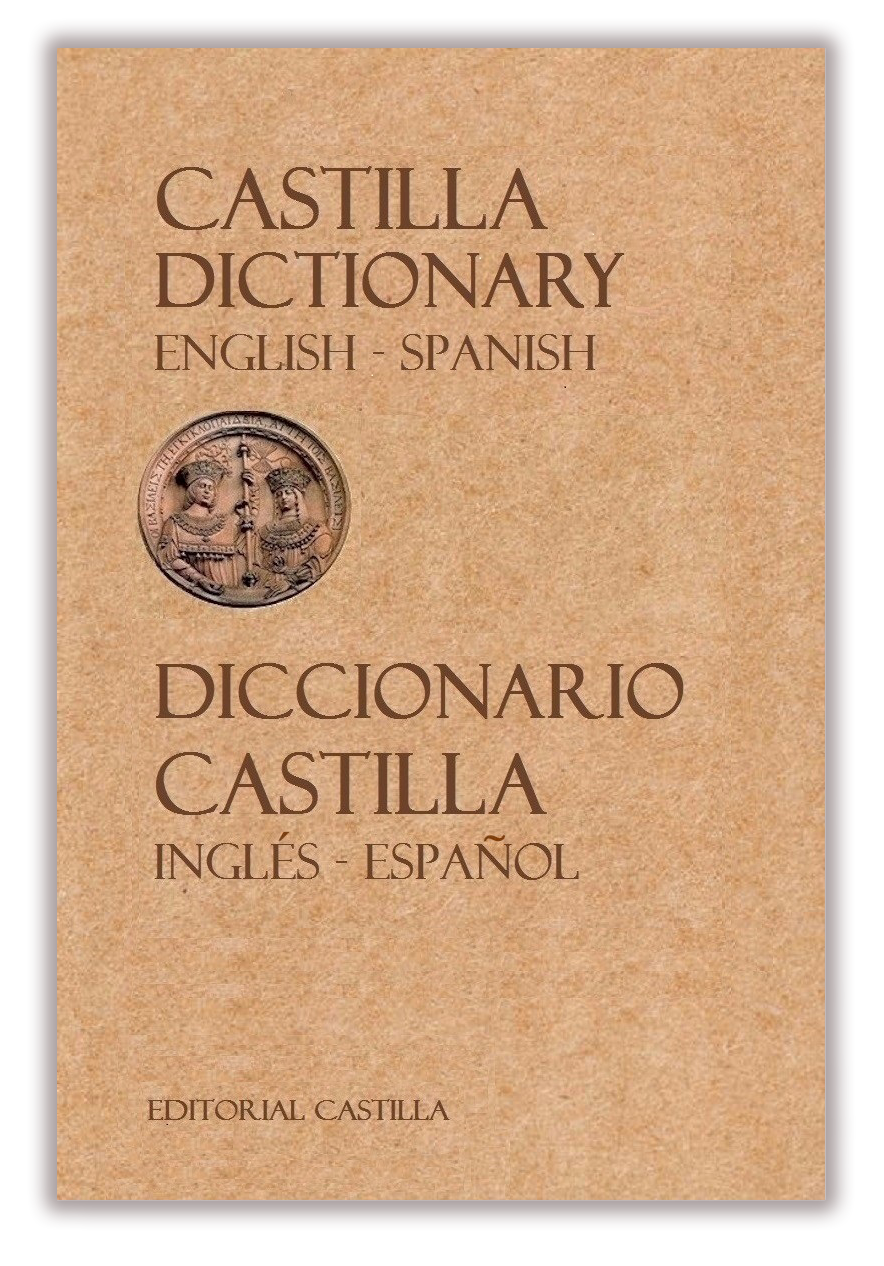
Castilla Dictionary | English – Spanish
SPANISH IS NOT ONE LANGUAGE -
IT IS TWENTY.
A phrase that means “skipping class” in Mexico means something entirely different in Cuba, Argentina, or rural Spain. The CASTILLA Dictionary is the first and only reference work to honour that reality.
Compiled over 15 years by Kenneth Allen Horňák, the world’s most prolific English - Spanish lexicographer and author of 20 dictionaries, this landmark 6,832-page work captures Spanish as it is actually spoken across every country and region in the Spanish-speaking world.
For any library, student, or professional who needs to truly understand spanish — not just translate it — this is the essential lifetime reference.
Real-life example sentences from native speakers
Real language, real context: Thousands of example sentences written by native speakers from across the English- and Spanish-speaking world — so you learn how people actually talk, not just how textbooks say.
CLICK HERE TO SEE:
Breakdown by country
Cultural inclusion at its finest: Every entry shows how words, phrases, and idioms differ — from Argentina to Venezuela, from Mexico to Spain’s regional dialects. Both British and American English are thoroughly covered. No other dictionary goes to this depth.
CLICK HERE TO SEE:
Cultural notes
Your cultural guide, built in: Horňák’s expert notes unlock the why behind usage — the history, the humour, the nuance that makes language come alive.
CLICK HERE TO SEE
New terms of our 21st century
The very latest, cutting-edge, state-of-the-art additions to each language for the 2020’s, either of colloquial, technological, or scientific nature. Latest medical procedures, technological advances, cellphones, etc. – terms and words you will come across.
Every Spanish verb
Complete verb mastery: Every one of the 13,300 Spanish verbs fully conjugated in a comprehensive appendix— an indispensable reference within the reference.
CLICK HERE TO SEE
Encyclopaedic quality
The CASTILLA has an added encyclopaedic quality. Scientific (Latin) names of plant and wildlife species have been included, and the chemical formula added to chemical substances.
CLICK HERE TO SEE
6,832 pages
Unmatched in scope: 6,832 pages of living language - the most comprehensive English - Spanish reference ever assembled, covering vocabulary no other dictionary captures.
2,256 photos
Visually immersive: 2,256 full-colour photos and diagrammes, each with bilingual captions.
CLICK HERE TO SEE:
WHY EVERY LIBRARY NEEDS THE CASTILLA DICTIONARY
Your patrons speak — and serve — communities from dozens of Spanish-speaking countries. A dictionary that treats Spanish as a single monolithic language fails them.
The CASTILLA doesn't just define words — it maps the full cultural landscape of the Spanish-speaking world, from the slang of Buenos Aires to the idioms of rural Castile.
It is not a duplicate of what your library already owns — it is the resource that makes every other Spanish reference more complete.
NOW AVAILABLE FOR PURCHASE AT EBSCO
EBSCO: ISBN: 978-0-9860058-8-6
-
hooky to play hooky (skip class in school) hacer novillos, saltarse las clases, faltar injustificadamente a clase, faltar a clase sin que los padres lo sepan, faltar a clase sin justificación, faltar a clase sin autorización He may have been playing hooky from school. Puede que haya hecho novillos en la escuela. (Argentina) hacerse la rata, hacerse la yuta, (Chile) hacer cimarra, hacer la chancha, (Costa Rica) aventarse de la escuela, (Cuba) comerse la guásima But what Julio liked to do was to play hooky. Pero lo que le gustaba a Julio era comerse la guásima. (Colombia) capar clase, (Ecuador) hacerse la pava, (Guatemala) jubilarse, (Mexico) irse de pinta, (Nicaragua) libretearse, (Panama) pavearse, (Paraguay) libretearse, (Peru) hacer la vaca, tirarse la vaca, (Puerto Rico) comer jobos, comer jobillos, irse de jobillos, (Spain) hacer novillos, hacer pellas, hacer rabona (see NOTE below) They’re playing hooky. Están haciendo novillos. (Uruguay) hacerse la rata, (Venezuela) jubilarse de clases [NOTE: In Spain, the equivalents for to play hooky vary greatly by region. All across Spain, hacer novillos is universally understood. Here are additional expressions for to play hooky, according to each region of Spain: (across Andalucía) hacerse la piarda, (across Cataluña) hacer campana, (across Galicia) latar, (across central Spain and to the north, from Madrid, up through Valladollid and over to Guadalajara) hacer pellas, (across Asturias) pirarse las clases, (across Cantabria) correrse las clases, (across La Rioja) hacer picias, (across Navarra) hacer borota, (Álava) hacer pira, (Albacete) fumársela, (Alicante) pelársela, (Almería) hacer zonga, (Ávila) pirarse, (Badajoz) fugarse, (Burgos) pirarse la clase, (Cáceres) fugarse, (Cádiz) meterse el fuego, (Ciudad Real) irse de toros, (Córdoba) hacer la rata, (Cuenca) irse de gorra, (Granada) hacer la rabona, (Huelva) hacer la mona, (Huesca) picarse las clases, (Jaén) irse de ramona, (La Coruña) colgar clases, (Las Palmas) pegarse la jullona, (León) pirar la clase, (Lugo) hacer picias, (Melilla) hacerse la guinda (Murcia) fugarse, (Palencia) pirarse la clase, (Salamanca) fugarse la clase, (Segovia) fumarse las clases, (Sevilla) hacer la rabona, (Soria) irse de toros, (Tenerife) fugarse, (Teruel) fugarse, (Toledo) irse de rollo, (Valencia) pelarse las clases, (Vizcaya) hacer pire, (Zamora) pirarse, (Zaragoza) hacer pirola